JUMP Citizen
"Capture useful feedback from riders at the right moment; improve the quality of feedback for operators; and, increase the efficiency of internal workstream to resolve issues reported by riders. "
About 54,000 tickets were filed weekly; and, to resolve an issue, it costs an average $6 per issue. Most issues reported by the riders do not accurately describe the issues. Incorrectly reported issues cause extra efforts for operators to flag problems on vehicles, and slow down the process of triaging and resolving issues. More descriptive and accurate reports would reduce the cost and time to resolve issues and improve our service quality to riders by providing safe and reliable vehicles.
I was the lead designer to understand user problems; gather insights from operators by working with product managers, engineers, UXR, data scientist; and, identify ways to turn our users not only to contributors but also a citizen who participate and improve JUMP eco-system together.
Team
1 Product Manager,
1 Product Designer,
5-10 Engineers,
1 UXR, 1 Data Scientist,
1 Design Engineer,
1 Content Strategist
My role
Product Lead
Duration
June 2018 - Present
Overview
250- 300 tickets were filed daily, and to resolve an issue it costs average $4. Most reports filed by users often didn’t accurately describe vehicle issues. Incorrect reports caused extra efforts for operators to flag problems on vehicles and slowed down the process of triaging and resolving issues. More descriptive and accurate reports would reduce the cost and time to resolve issues and improve our service quality to riders by providing safe and reliable vehicles.
I was a lead designer to understand user problems, gather insights from operators and create a vision to turn our users not only to contributors but also a citizen who participate and improve JUMP eco-system together.
Problem Definition

“I keep riding bikes and scooters that have issues.”
Riders

“We don’t know the explicit issues our riders have.”
Uber ops
The most problem contributing to incorrect reports was a lack of guidance for riders to categorize their issue correctly.
One of the most critical issues is broken vehicles are still available to riders, and most riders don't know the issues until start riding. Once the issue is reported to customer support, operators verify the issue and dispatches mechanics to retrieve the vehicle. This process takes time and lets broken vehicles available for riders.
Using a broken vehicle increases safety issues for riders and creates a negative experience, ultimately breaking the trust with riders.
Our data shows how this negative experience affects retention rates.
Northstar goal
"Get users care about
our vehicle."
I remember my very first experience of JUMP riding no-battery bike. I stopped, parked at the corner of the street and uber back home. No reporting issue. Most people who rode Jump before experienced this frustration at least once but rarely report issues like me. As you see, people don’t really care about our vehicles. Some people don’t report issues even they know how to do. Some people don’t even know what to do(Poor reporting issue EX). Some people broke vehicles and abandon it outside of service area. We never have seen people treat the same way to their own car. Now we are clearer of what’s our Northstar goal.
Solution
To achieve the Northstar goal, we need to first resolve the following issues:
Phase 1. Easier issue-reporting flow
Even though the users are able to report issues from the help menu, most of the users don’t use that feature. The biggest reason is the accessibility of the feature. as the issue reporting feature is hidden under the “help” menu, many users just bypass that feature and just call for support. The second reason is the categorization. The dropdown options provided in the reporting feature do not provide user friendly categorization of issues. As such, most of the users select “others” as the category when they use the feature.
Phase 2. Feedback loop
Once we receive users' feedback, we want to make sure they feel their issue reportings are heard by providing responses and share the status of our responses in a timely basis.. By doing so, the users would feel they are valued part of the Uber community, which will increase the brand loyalty.
Phase 3. Creation of reward system for reporting issues
It would be very difficult to retain users with bad experience if their feel that we don’t care about their user experience, and their issue reportings are not taken seriously. As such, in addition to making it easier to have users report issues and provide timely responses to their feedback, we should also incentivize the users for reporting issues. By doing so, we will be able to retain the users with bad experience with our service; and, have them report more issues so we can improve our product.
Phase 4. Personalization of vehicles for JUMP citizens
After vehicles are repaired based on issues reported by users, we want to create a relationship with the vehicle and the user who reported the issue. Therefore, we should allow the user who reported the issue the privilege to personalize the vehicle.

Storyboard

Most who had issues for rental get to end ride state

Many users encounter issues while riding. If something was wrong, they stop, lock the bike or scooter on the side of the street and contact to support. Our first step was enabling users to report issues after they end a ride. “Rating" . By having a rating, we want to
-
Engage users to provide general feedback.
-
Capture the top issue types
-
Breaks vehicle that doesn’t fit for rental
-
Feedback loop
Make sure users feedback is useful
To ensure rider feedback is useful for our ops, I involved a central ops manager to run user research.
1. Qualitative user research: Putting together a group of 5 or 6 representative head mechanics to get insight. (representative mechanics - different skill set levels, different cities, etc.)
2. Quantitative user research: after this qualitative feedback, we had a survey for the whole mechanic population, to make sure the results we got on phase 1 are appropriate.
It is important to make sure our flow is not overwhelmed for a user to report the issue because they’ve already been through a bad experience previously. At the same time, to make sure the feedback is still useful for our ops, I asked questions which is still valuable between options based on detail level.
The first option would ask users to tap the bubbles of the issue types when users tap a sad face. The second option is asking them to tap broken parts or areas of the bike if they tap bike issues after they tap a sad face. The last option is asking more detailed questions after they tap the broken parts or areas of the bike, also able to add photos.
Low level detail

Medium level detail

High level detail

Responses / Learnings
Medium level of detail
"Mechanics can diagnose any problem. Customers just need to point in the general direction of the issue(s) "
Do not have to take a pic
“We don’t need real life photograph of the bike/area of the issue since most issues are not visible”
Diagram of the bike is helpful
"It helpful for a user to have the diagram of the bicycle to pinpoint issues"
Top issue type
"Top 6 issue types ( Flat tire, Lock, E-assist, Brakes, Gears ) covers all we need."
Make sure we break right vehicle
Many of the issue types can be solved via self-service or routed more efficiently with correct tracking and routing. Once we collect users feedback, we want to, triage and resolve programmatically.

This chart shows when how we break vehicles based on where users come from and types of issues. For example, if users report issues such as brakes or flat tire directly related to the rider’s safety, we would like to break the vehicle right away. For other issue types (e-assist, gears, seat, other) that are not critically related to riders safety would be to look for 2 or more issues before breaking.
Design
scroll

Trip summary
Users can rate by tapping 2 different mood faces (unsatisfied & satisfied) from the receipt after their trip ends.
Once users tap, they can select issue type that applies.
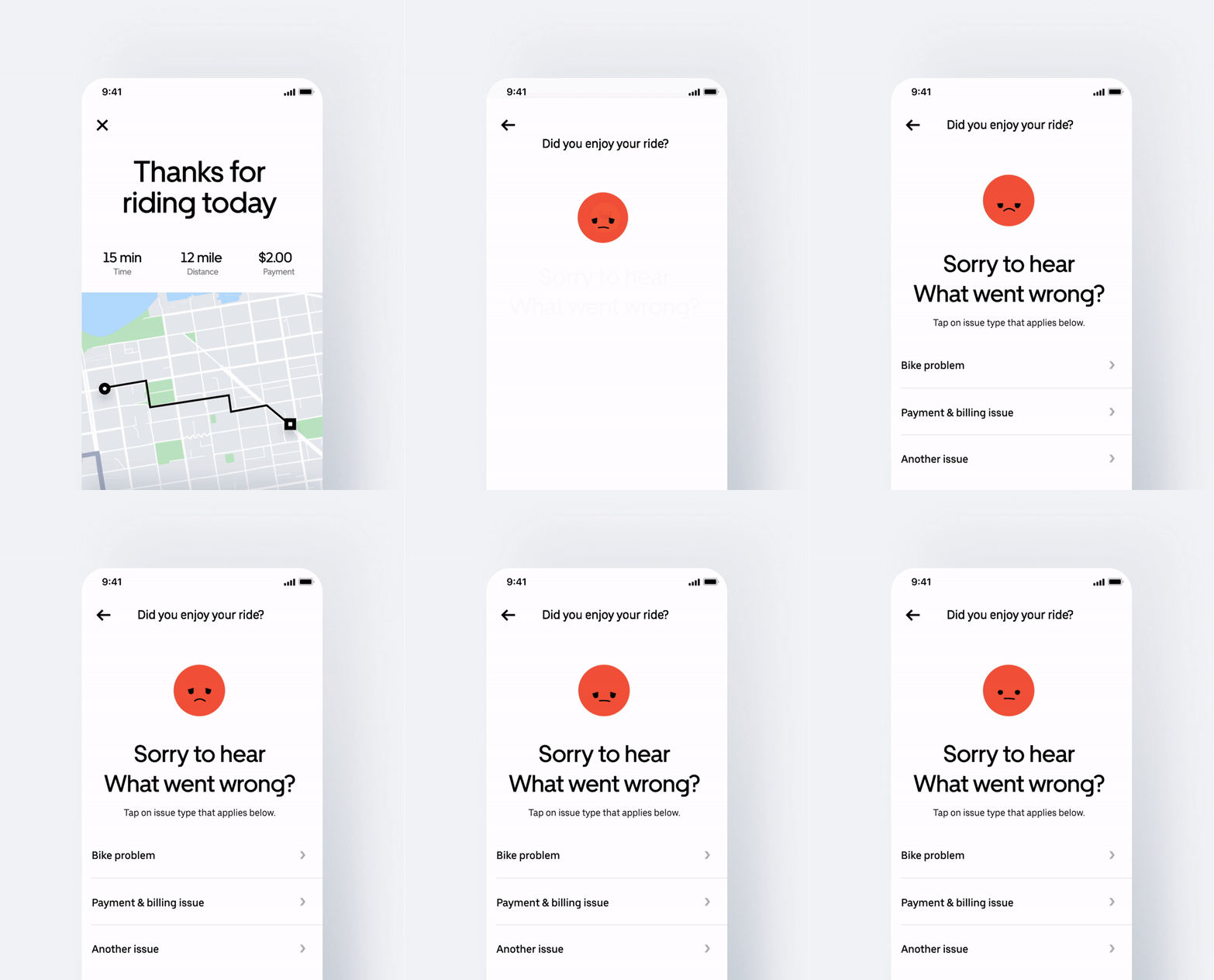
Report issue


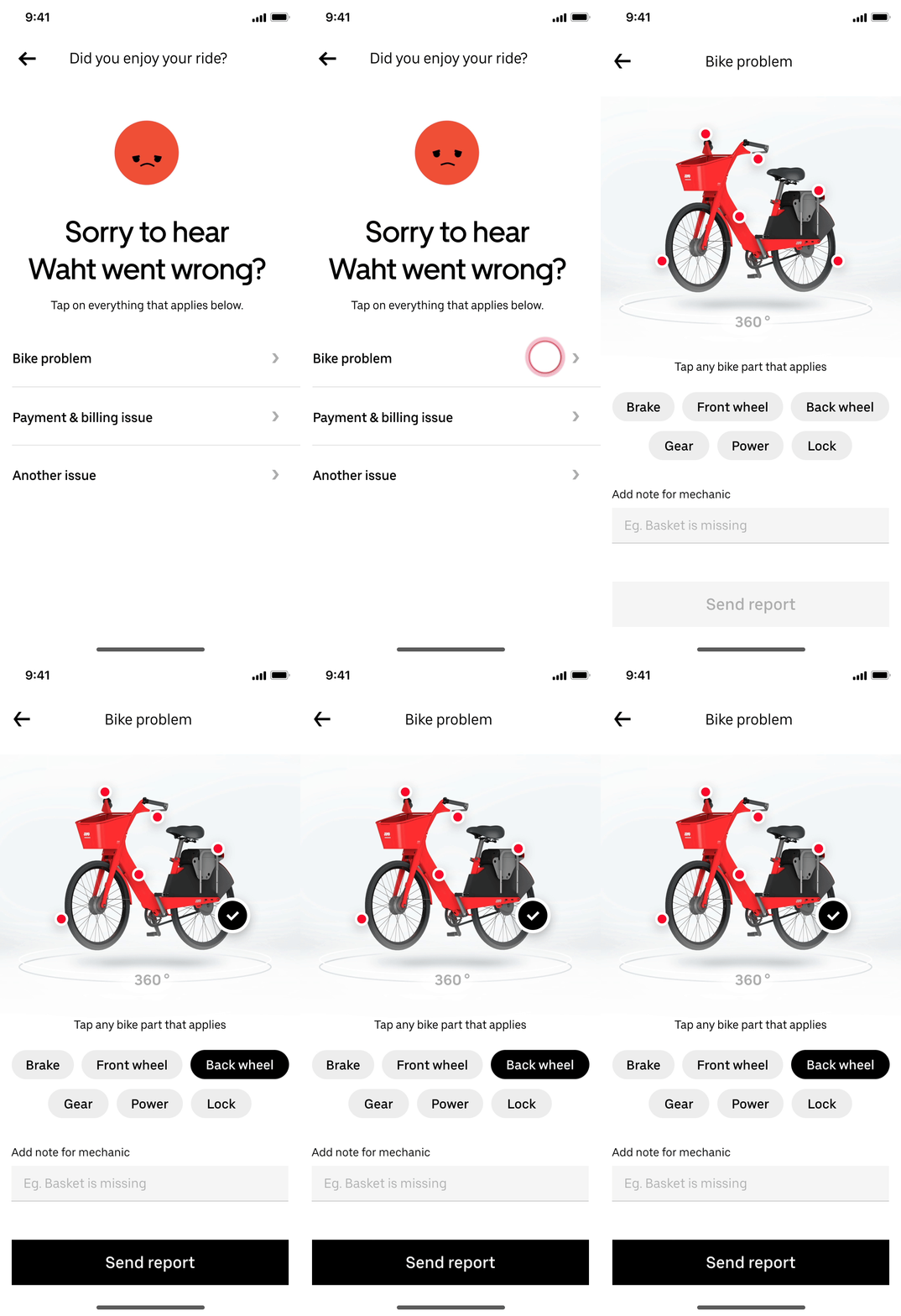

Delightful experience by enabling users rotate 360 degree of 3d vehicles helps to increase their sentiment from bad experience on their previous trip.
They can either tap on the 3d vehicle or tap bubbles below to select issue. (They are corresponding each other)
Mechanic issue

Billing issue
Another issue


Hi, Norah


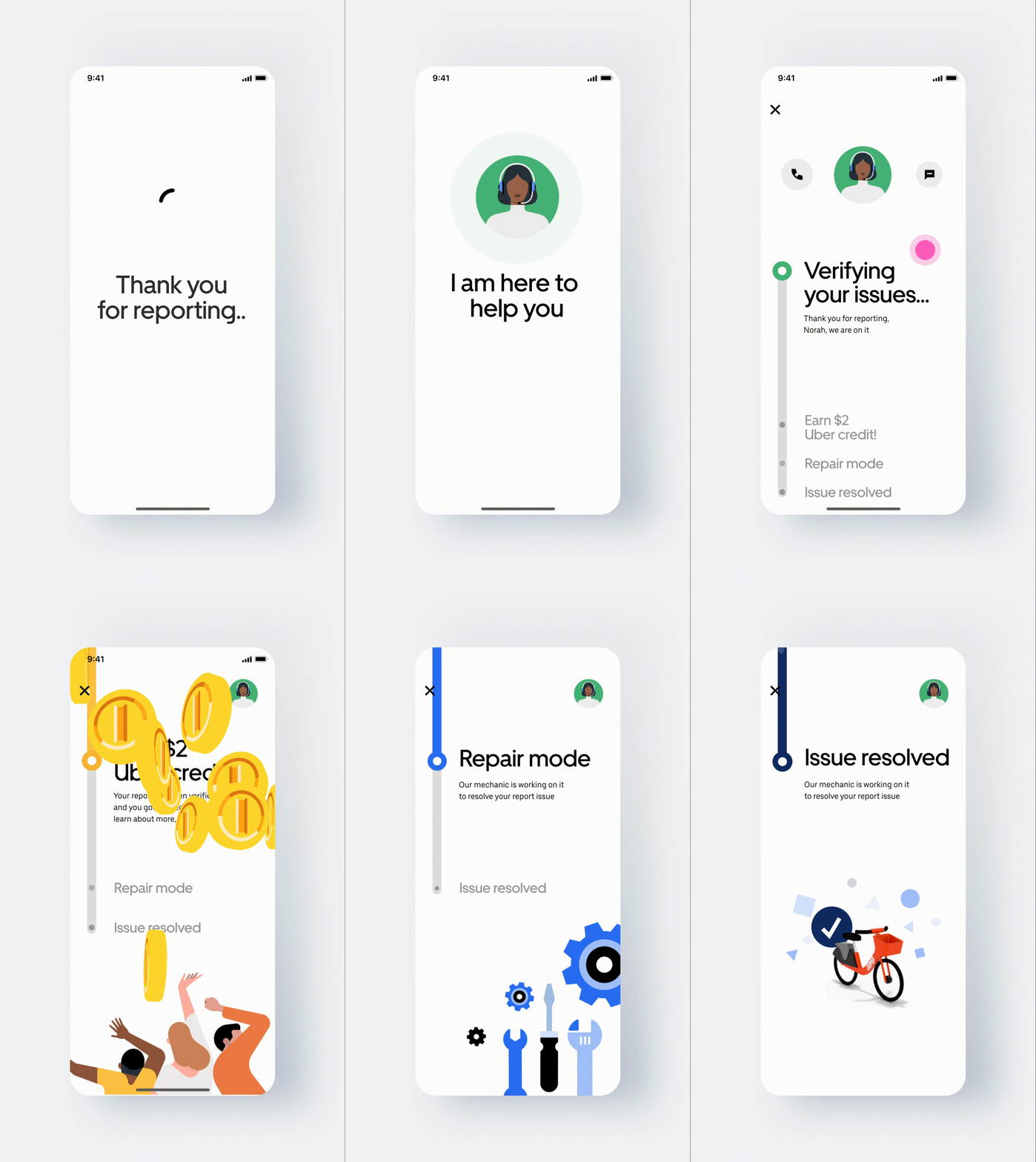
Connect to JUMP Customer support
Users expected to get a simple confirmation screen, but instead gets connected with a our customer service.
It’s encouraging to see a face behind the scenes, taking care of the bikes she rides everyday.

A few hours later..

A few hours later, users gets a push notification that lets her know a JUMP mechanic has started fixing the issue—and she earned $2 Uber credit for reporting the issue!
It’s a pleasant surprise to know the bike will be fixed thanks to users’ report—and that JUMP is rewarding users for the deed.

On repair
Users are able to check their report status through menu "your trip history" anytime they want.

Vehicle is fixed
The next day, users opens the app to reserve a bike for their morning commute.
They are thrilled to see that her bike was fixed—

Becomes the top JUMP Citizen
After several months of reporting minor to serious bike problems around the city, a user is chuffed to earn the #1 JUMP Citizen spot in her neighborhood.
It’s fun to get recognized for their good deeds. Plus, they are helping to make more bikes safe to ride for everyone.


User testing
5 customer interviews are enough to reveal big patterns.
We interviewed 5 customers, 1:1. The team watches over video from another room.


Personalizing a bike name and avatars are great and very shareable. I’ll take a screenshot and share with my friends, which will then spur them on.
Mark Inman
Rewards are nice, but more importantly, I love the follow up and makes me feel like JUMP is hearing me and making me feel better, and want to report more issues.
Will Salisbury

That’s great. That’s so funny. (Smiles, light laughter) I don’t really care who the mechanic is but i do like the engagement. I just feel good that I’m being heard.
Will Salisbury
Conclusion
User reporting flow is clear and easy
: 5 out of 5 easily able to report an issue without any friction.
Create a feedback loop between Rider and Ops
: 5 out of 5 easily able to report an issue without any friction.
The cash reward is good but not necessary
:2 out of 5 mentioned they would willing to report issues even without cash rewards. Also, they didn’t understand the point system. Also, there would be an issue of fraud. We decided to remove the reward system and watch how many users engage to report issue without it.
Naming has some fun and longtail benefits
:3 out of 5 showed their excitement in personalizing their vehicle
1 out of 5 showed they don’t mind doing it or not. One said it’s a bit childish.
We decided to remove this flow for MVP to investigate more how much this feature impactful to users for engagement in issue reporting.
Milestone 1 (MVP)
We don’t want to wait for every single feature get built and ship at once. Breaking down milestones and incremental changes is the way we can save our efforts in case something doesn’t work well within our fast-moving and limited resource environment. We can flexibly change our prioritization based on each result.
It is critical having alignment with milestones with other all stakeholders and keep ensuring that we are progressing toward its ultimate objectives.
For MVP, we are aligned that we implement issue report flow at the end so that we can collect feedbacks as much possible. Also, breaking vehicle automation will reduce our cost significantly.
We are targeting to launch MVP in late Nov.
MVP Goal
-
-$0.14/CPT (Reduction in Support Cost)
-
-$0.28/CPT (Increase in Utilization)
-
+$0.18/CPT (Decrease in Vehicle Uptime)
Total: -$0.24/CPT


